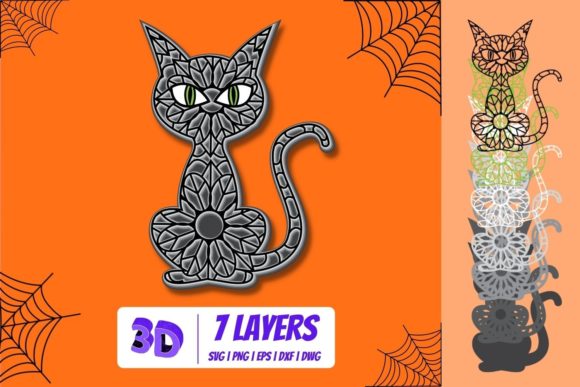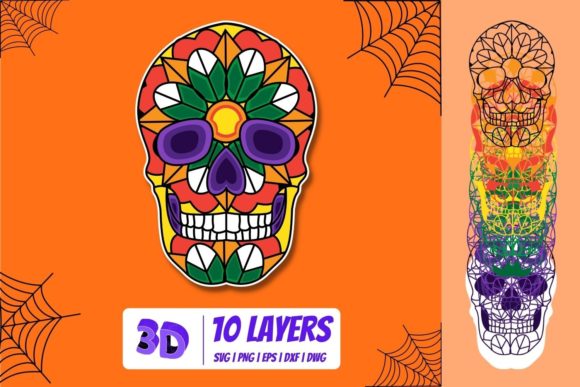
3D Skull SVG: Strategic Asset Management for Digital Production
In the landscape of digital fabrication and graphic design, the distinction between a simple image and a production-ready vector file is often the difference between a failed project and a scalable business operation. The 3D Skull SVG represents more than just a thematic visual element; it is a precise, mathematically defined asset designed for high-fidelity output across multiple software ecosystems. For entrepreneurs, makers, and creative professionals, understanding the technical nuances of this file type—and its accompanying formats—is essential for maintaining quality control and operational efficiency.
This guide provides a strategic breakdown of how to leverage the 3D Skull SVG download, which includes svg, dxf, png, and eps formats in a zipped folder. By analyzing the specific utility of each format and their compatibility with industry-standard software, we can establish a workflow that minimizes errors and maximizes creative potential.
The Technical Architecture of the Download Package
A professional-grade digital cut file is rarely delivered as a single entity. The inclusion of multiple formats within a single zip folder allows users to select the appropriate tool for the specific job at hand. This flexibility is critical for professionals who may need to switch between laser cutting, vinyl printing, or large-format graphic design depending on client requirements.
- SVG (Scalable Vector Graphics): This is the primary format for most modern cutting machines. It retains editable paths and layers, allowing for precise manipulation without loss of quality.
- DXF (Drawing Exchange Format): A universal vector format widely supported by older or basic CAD and cutting software, ensuring broad compatibility.
- EPS (Encapsulated PostScript): Ideal for professional illustration software, offering robust path data for complex graphic design workflows.
- PNG (Portable Network Graphics): A raster image file with a transparent background, provided at 300 DPI, suitable for quick previews, web use, or non-vector-based printing methods.
By having all four formats available, you eliminate the bottleneck of format conversion, which often introduces artifacts or reduces resolution. This comprehensive approach supports a smoother decision-making process when selecting the right medium for your project.
Optimizing Workflow with Cutting Software Compatibility
The true value of the 3D Skull SVG lies in its interoperability with leading design platforms. Different software environments cater to different user expertise levels and hardware capabilities. Understanding these distinctions ensures that you are not limited by your tools but rather empowered by them.
Advanced Design Environments
For users operating sophisticated cutting machines, the SVG format is the gold standard. It integrates seamlessly with:
- Cricut Design Space: Widely used by hobbyists and small business owners, this platform requires clean SVG files for optimal cutting results. The 3D effect in the skull design must be preserved through proper layering in the source file.
- Silhouette Designer Edition: Offers advanced features for those needing more control over line weight and cut settings compared to the basic version.
- Make the Cut (MTC): A powerful standalone program that allows for complex nesting and arrangement of designs, crucial for minimizing material waste.
- Sure Cuts A Lot (SCAL): Known for its stability and ease of use, SCAL handles intricate vector paths efficiently, making it a reliable choice for detailed projects like the 3D Skull SVG.
- Brother ScanNCut “Canvas” software: Specifically optimized for Brother’s scanning and cutting ecosystem, ensuring accurate recognition of the file’s contours.
When using these platforms, ensure that the SVG is ungrouped if necessary to allow for individual color changes or material swaps, particularly if the "3D" effect is achieved through layered elements.
Professional Illustration and Basic Cutting Tools
Not every project requires a dedicated cutting machine. The EPS and DXF formats expand your reach into different professional domains.
- CorelDraw, Inkscape, and Adobe Illustrator: These are industry-standard vector editors. The EPS format is particularly valuable here because it preserves vector integrity while being compatible with a wider range of print production pipelines. If you are designing custom packaging or large-scale banners featuring the 3D Skull SVG, working in Illustrator or Inkscape allows you to refine the typography and layout around the central graphic.
- Silhouette Basic Edition: While the Designer Edition offers full SVG support, the Basic Edition often relies on DXF files for import. The inclusion of the DXF file in your download ensures that users with entry-level hardware are not excluded from utilizing this high-quality asset.
Strategic Applications and Use Cases
Integrating a 3D Skull SVG into your business or creative strategy requires more than just technical proficiency; it demands an understanding of market positioning and audience engagement. The skull motif carries significant cultural weight, ranging from traditional Day of the Dead celebrations to modern edgy branding and Halloween marketing campaigns.
Brand Identity and Visual Communication
For brands aiming to project strength, resilience, or a bold aesthetic, the 3D Skull SVG serves as a potent visual anchor. Unlike flat 2D icons, the three-dimensional rendering adds depth and realism, which can enhance perceived value. When used in logo design, merchandise, or social media graphics, the clarity of the vector lines ensures that the brand message remains sharp and recognizable across various touchpoints.
Operational Efficiency in Small Business Operations
Small business owners and freelancers often juggle multiple roles. The availability of pre-designed, high-quality assets like the 3D Skull SVG reduces the time spent on graphic creation. Instead of spending hours drafting a complex geometric shape, you can focus on application—such as creating t-shirts, decals, or promotional materials. This shift from creation to curation allows for faster turnaround times and better resource allocation.
Educational and Creative Learning
Educators and content creators can use this asset to teach principles of vector geometry, layer management, and design software navigation. The complexity of a 3D render broken down into vector paths provides an excellent case study for students learning how digital images are constructed and manipulated.
Risk Mitigation and Quality Control
While digital assets offer convenience, relying on them without due diligence can lead to subpar outcomes. Several risks must be managed to ensure the 3D Skull SVG delivers the expected results.
Resolution and Scaling Limitations
Although SVG and EPS are vector-based and theoretically infinitely scalable, the original source art must be well-constructed. If the curves are jagged or the nodes are improperly placed, scaling up will reveal these flaws. Always preview the design at 100% scale before sending it to a cutter or printer. Conversely, do not rely solely on the PNG file for large prints; its 300 DPI limit means it will pixelate if stretched beyond a certain physical size. Use the PNG only for low-resolution needs or quick mockups.
Software Compatibility Errors
Even with a versatile zip folder, software updates can occasionally break compatibility. It is prudent to test the file in your specific version of Cricut Design Space or Silhouette Studio before committing to a bulk production run. Check for "broken paths" or missing elements that might cause the cutting blade to skip sections of the design.
Licensing and Ethical Considerations
As a professional, verify the licensing terms associated with the 3D Skull SVG. Are you permitted to sell physical items made from the design? Can you modify it significantly and claim new copyright? Clear understanding of these terms protects your business from legal disputes and maintains ethical standards in the creator community.
Decision-Making Framework for Implementation
To maximize the utility of the 3D Skull SVG, adopt a structured approach to implementation:
- Define the End Goal: Determine whether the output will be a vinyl decal, a printed t-shirt, or a digital graphic. This dictates which format (SVG, DXF, EPS, or PNG) is optimal.
- Select the Right Tool: Match the format to your software. Use SVG for Cricut/SCAL/MTC, DXF for Silhouette Basic, and EPS/Illustrator for complex graphic design.
- Test Before Scale: Produce a single prototype to check alignment, cut depth, and visual impact.
- Iterate Based on Feedback: Use the initial result to refine your design choices, such as adjusting contrast or adding complementary text.
By treating the 3D Skull SVG not just as a picture but as a modular component of a larger production system, you elevate the quality of your work. This strategic mindset—focused on precision, compatibility, and intentional design—separates casual users from professional practitioners. Whether you are enhancing your personal brand, streamlining your manufacturing process, or educating others, the thoughtful application of this multi-format asset package supports long-term success and creative excellence.